
Dental office advertising is something which can benefit hugely from an online presence – particularly when it comes to online reviews. Dental health is something that everyone should be aware of, especially since it can affect so many other aspects of a person’s general health (and appearance). Dentists are something like doctors and lawyers in that people tend to seek out practitioners who make them feel comfortable; hence a good online presence is invaluable.

Over the years, our company has worked on a number of campaigns for individual dentists and dental clinics, so we have a fair amount of expertise in working with the specific needs of these groups. Our dental clinic advertisement has all followed something of the same form: search engine optimization has formed the basis of them all with the ultimate aim of both increasing traffic in general and the ongoing customer base in particular. One of our recent dental clinic advertising campaigns also included such a fast way to increase an online presence and hence sales as a Google AdWords campaign, and reviews management to enhance the trust of prospects!
Results Obtained after Running an Advertising Campaign
The results of managing one of our recent dental office advertising campaign have been as follows: even with people thinking that AdWords campaigns have cost too much money to be entirely effective, within a week we managed an AdWords campaign for a dental clinic with $450 spent. The campaign resulted in a definite rise in conversions. Our client received 19 phone calls to the office, 6 of which turned prospects into clients.
Also, a set of steps within the framework of search engine optimization for dentists and reviews management allow us to increase dentist’s site traffic by 3.6%.
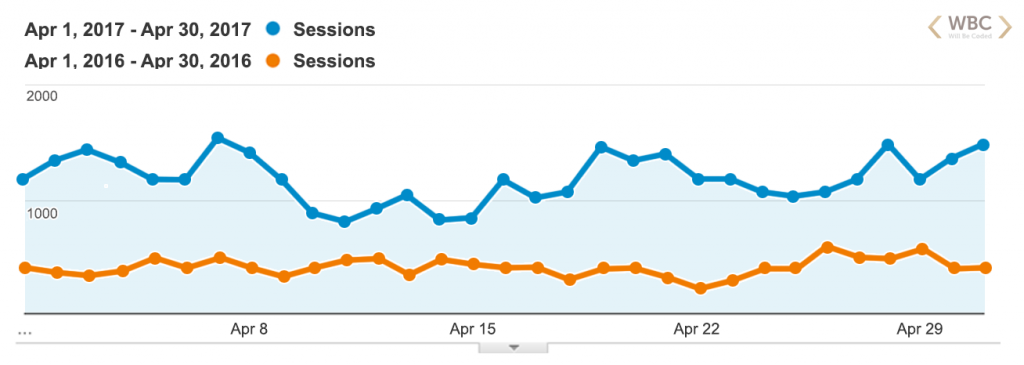
In a nutshell, such a combined method of advertising resulted in increasing sales of our client by 57%.
AdWords Campaign for Fast Results: Our Tips
Running AdWords campaigns is one of the best marketing tools in existence when it comes to how to advertise a dental clinic, as it can help sales and customer retention grow by up to four hundred percent. Despite these numbers, they are still used by less than half of the companies and individuals to which they would be most relevant.
While an entire process of managing a campaign may seem daunting, setting up an AdWords campaign is not a difficult task. The difficulty lies in making it a profitable campaign, but the tips below (plus some advice from a dentist SEO expert) will make that more attainable.
Include relevant information to be ahead of your competitors
The more information you can give prospects in your dentists’ marketing campaign, the more likely it is that they will choose you over another specialist who offers the same services.
In every single advert, make sure that as much information as possible is present. This includes relevant information about services, the location of the company, and anything else appropriate for the topic. For instance, if you have more than 20 years of experience it is a must to include.
Do not generalize – you are wasting space and money! Generalizing is the worst answer to how to advertise a dental clinic.
Even with the additional space given by advert extensions, headlines are still the most important part of an advertising campaign. Headlines are what people notice first, with the first headline being of particular importance for this reason.
If there is anything which puts your business into a special category or makes it stand out from others in the business, make sure to include it in the advertising campaign. For instance, if your dental office works on Sunday you need to inform prospects and clients about it in your ad.
Any good AdWords campaign for a dentist should include a good call to arms to get people excited to act. Calls to action can be anything from moving someone to phone right now and book an appointment, to spreading the word about the existence of the dental surgery to others. A call to action is useful to have as, when done right, it impels prospects into making the decision to become customers. Also, you can offer a discount or a special offer as a part of a call to action (e.g. Call us today and get a free whitening kit!).
Use extensions as a tool of better presenting the information
Sitelinks are almost exactly what they say on the tin – they are links to specific pages within sites, which the person running the campaign thinks will be beneficial to the overall dentist advertising. Using a sitelink extension brings a whole new dimension to the question of how to attract new patients to your dental practice, as it allows your company to choose several different page destinations for a potential customer to see. Perhaps they could be chosen from a list of services, the homepage, and the appointment page and price page, or whatever is needed to be emphasized.
Review extensions is a way of incorporating a review directly into an AdWords campaign for a dental clinic – it expands the space available on an advert and gives the company running the campaign a chance to apply to people on its own terms. Rather than having the people who will see the advert going to a review site of their own accord, including a review directly in the advert will build confidence, and make it more likely that people will click on the advert itself.
Call extensions are mainly used in mobile devices when people have an immediate need for searching dental services. This extension allows prospects to make contact with the business or individual via a phone call. Prospects just type a phrase like ‘dentist near me’, see your advert and call you directly from an ad.
Use negative keywords for not to paying for irrelevant search queries
Negative keywords are just as fundamental to the workings of an AdWords campaign in the framework of dentist SEO marketing as positive keywords are. Top positive dental keywords, in this case, are how the AdWords campaign knows to turn up on searches. Having positive keywords is vital for an AdWords for a dental clinic to work correctly, as it is these keywords which will trigger the adverts appearance.
Negative keywords work in the opposite way by flagging up searches which the PPC for a dentist adverts should not appear on. If a keyword turns up which is not directly linked to Examples of negative keywords include:
- • ‘Dentist’ – this is too vague and can include marketing to dentists as well as the hoped for audience.
- • ‘Discount’ – make sure to put this as a negative keyword unless you are offering discount services. Otherwise, a lot of money will be wasted on people who click the adverts under false pretenses.
When building a list of negative keywords, we usually add between 70 to 300 words and phrases in order to prevent showing an AdWords ad to those who are not dentist’s potential clients or who just need some information instead of services.
Location Settings
Proper location settings allow search engines to better link up adverts with people making appropriate searches. If you use Google AdWords in Canada, you will have two ways in which location setting can be set up to the advantage of a dentist advertising campaign.
One method is the use of specific keywords to restrict the searches on which an AdWords for a dentist will appear, meaning that only people who add location keywords (e.g. ‘good dentist in Vancouver’) into their search will see the campaigns. The other method – which is more commonly used on mobile searches – is something which uses the built-in location services of the search engines themselves to streamline the process. So, for example, someone who is in Chicago and is using their mobile device to search for dental practices will not have adverts for dental clinics from Canada appearing.
Mobile searches
People use mobile devices differently from desktop ones, and there are two separate ways in which to use this when it comes to how to promote a new dental clinic: one way is to create adverts which are able to adjust themselves according to what device they find themselves on; the other is to create an entire set of adverts which are specifically designed for use on mobiles.
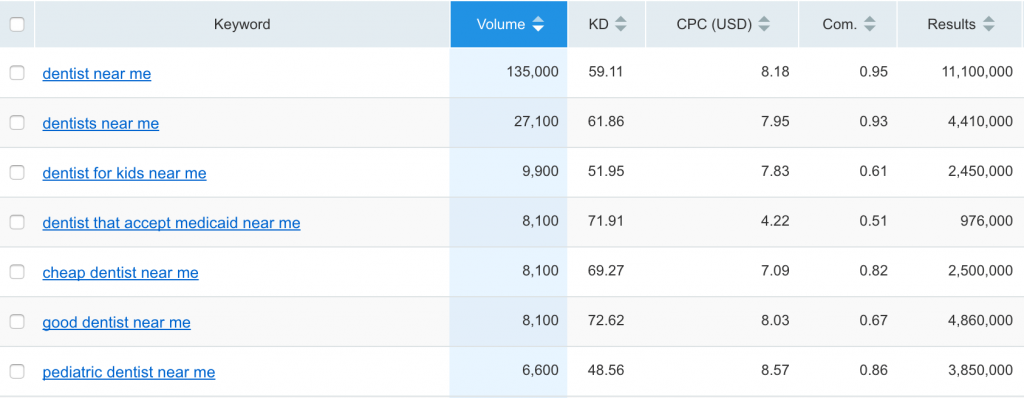
Keywords which can be used for mobile searches include:
- dentist near me
- nearest dentist
- dentist around me
- cheap dentist near me
- good dentist near me
- dentist for kids near me
- emergency dentist
- emergency dentist near me
Measure and Test a Campaign
It should really go without saying that a close eye should be kept on the advertising campaigns; this applies to before and after the campaign goes live.
Test the campaign thoroughly before it goes online – each advert should have a minimum of five different texts tested on it, to see which ones look the best, and which ones work with the space available, and which match types work the best.
While the campaigns are running, keep an eye on how they are performing. Being able to tell which adverts are leading to the most conversions and which adverts are leading to the least will be beneficial when it comes to reallocating funds between the campaigns.
Remarketing
A remarketing campaign which targets specific people (mainly based on their interests) is something which invaluable for any campaign. Remarketing targets people who have gone through the process of ordering something from a page or just visiting a contact page, but, for whatever reason, have not finished. The particular campaign is based around trying to win them back.
Using the remarketing campaign in our last AdWords campaign for a dental office resulted in a nearly 35% increase on ROI.

Search Engine Optimization as a Long-term Strategy
Search engine optimization for dentists is perhaps one of the most complicated methods of online marketing, but for long-term purposes, it is one of the best methods for growth. We normally optimize sites with the best content possible that is client-oriented. For dental websites, in particular, we focused on how the clients would be looking for the services in question: our work began by doing thorough research into the keywords that customers would use. This research was put into good use right away, when it came to writing headlines and tags in particular, to make it more likely that the content would be seen. We also used link building to increase visibility in the Google search results and hence to grow traffic as it is one of the main goals of dentist SEO marketing.
While working on the site itself, we (as experienced dentist SEO experts) always took the time to make sure that the site is easy to navigate and understand, so prospects were not put off by a seemingly impossible website. Our research included research into competitors, for a variety of reasons: one, to see how they approached reaching out to customers, and two, to see what keywords they used to attract attention. Also, we encouraged our clients to use local marketing as well, and to use social media platforms to interact with people, depending on which one was most appropriate for them.
Here is our quick dental website SEO checklist:
- • Competitor analysis
- • Target audience analysis
- • Keywords research
- • Content creation
- • Organic link building
- • Off-page and on-page optimization
- • Reputation management
Reviews Management to Increase Conversions
Reviews are very useful for businesses and individuals as dentists because many prospects and clients use review sites to ensure that they are getting the best teeth care and treatment for their money.
Review correction services are something which has sprung up in response to the increasing reliance on review sites. What happens is that such services keep an eye on the reviews which are connected to the service at hand, and flags any reviews which look like they are fake. Since a company relies on reviews for a good reputation, having someone flag these reviews up as quickly as possible is necessary for work to be done on combatting them.
There are a number of good review sites in existence, but Yelp is perhaps one of the more well-known as used ones. When it first began, Yelp was originally just a review site which gave people a place to leave multiple part reviews which covered text and pictures (people can leave star reviews – one star is bad, five stars is excellent; they can also leave text reviews of varying lengths, and add pictures if they choose), but it is recently moving into allowing people to make reservations through it as well.
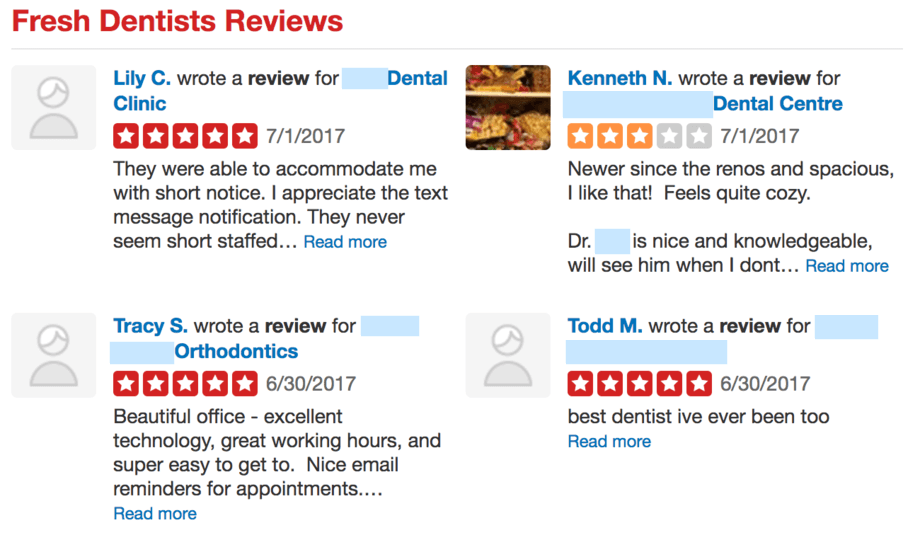
One of the major answers to how to increase patient volume in a dental office is to cultivate good reviews. Reviews help people to decide how trustworthy a business is, so good reviews are essential to the process (particularly if the services provided are medical in any way). In some ways, even the existence of a review channel will be enough, as it will show people that the service is confident enough in themselves to have a place for people to leave reviews.
Having a review page which is specifically linked to in either adverts or an online presence can be useful in increasing conversions.

Conclusion
Marketing a dental practice is something which can take many forms. Running an AdWords campaign and doing SEO for dentists is something which can take a lot of time but in the end, it is worth it. Every action taken is one which can increase visibility and conversions, thus leading to a more successful business in the end. AdWords campaigns should involve multiple advertising groups and a specific remarketing campaign to be successful, while the SEO approach (if done correctly by dental SEO companies) should ensure that the entire website is configured to be properly seen by search engine algorithms.
Call us today to get new clients and increase your sales by 60%! Best dental marketing company is here to grow your business.
Attracting personal injury clients (people who have suffered a physical or psychological injury through the action or inaction of another person or group) is something which lawyers can find problematic over the years, as there can be problems with gaining people’s trust for long enough to persuade them that legal advice is easy to gain access to. This means that personal injury internet marketing is a set of tasks with many pitfalls that need to be considered.
Personal injury inquiries cover a number of bases – there are motor vehicle accident claims, claims against an employer for something which happened on their watch, medical malpractice cases, liability, assaults, pet assaults, and more. Personal injury law advertising needs to be able to reach potential clients as soon as possible. Because of this, there are some methods of advertising which are more useful for solving the issue of how to get personal injury cases than others. The ones which give quick results with very little lead time are better than other forms of personal injury attorney advertising.

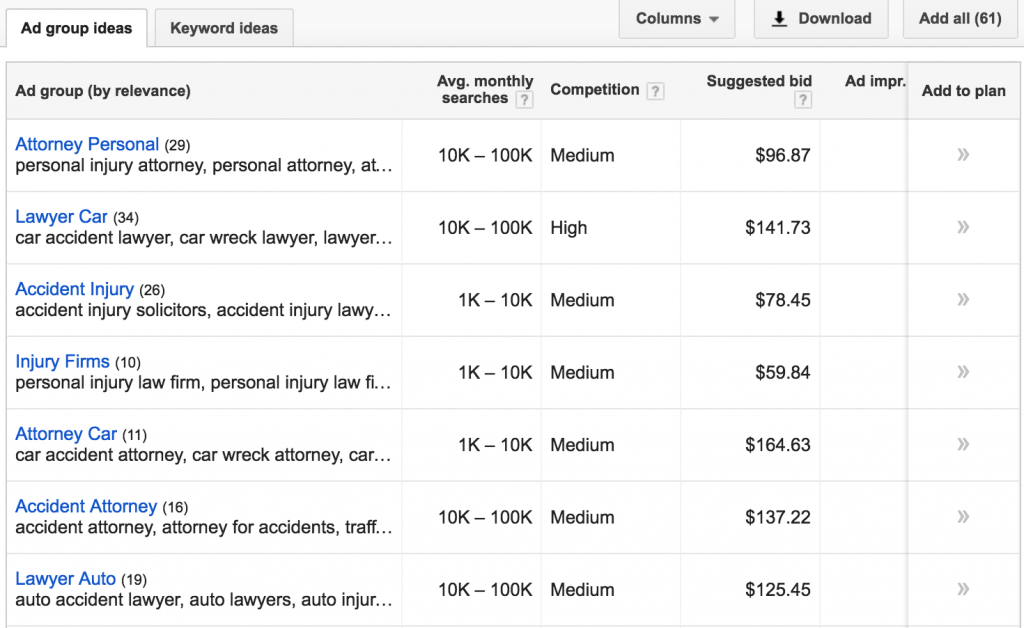
AdWords is perhaps the best method of getting personal injury leads, as that way attorneys can take advantage of people who are looking for legal services right at the moment when the injury is fresh and there is a strong need of quick help. AdWords allows personal injury lawyers to put their advertising right in front of people who are making specific searches. While this is a very effective method in marketing personal injury practice, people undertaking it should remember that AdWords campaigns and PPC can be quite expensive – personal injury claim adverts can cost up to fifty dollars per click. Nevertheless, you should use Google ads for sure when there is a strong need of internet marketing for law firms.
How to Get More Personal Injury Clients (Using AdWords)
Our company has a lot of experience when it comes to working with clients who handle personal injury claims. Thus, we can share a strategy we used to promote personal injury law firms via AdWords and provide some tips to get better results of running such a campaign to get personal injury leads.
The Results Obtained
In one of our latest AdWords campaigns for a personal injury law firm, we helped our client to increase sales by 50% within 1 month.
Managing an AdWords campaign, we experienced a lot of success by simply keeping to an established strategy. Many people have complained to us in the past that AdWords was too expensive for them, but our response is simply that it hasn’t been configured correctly.
Using a fairly basic AdWords campaign with properly grouped positive and negative keywords (including an active remarketing group), a well-thought out approach to using SEO (website marketing for attorneys) to properly optimize the content which was included in the law firm’s online presence as a whole, and proper research into what competitors were doing with their own advertising campaign and initial content, allowed us, over the course of two weeks, to run a campaign which resulted in 15 calls being made from prospects to the law firm. These fifteen separate phone calls resulted in 5 prospects becoming clients, all at a cost of $600.

Before We Started
Our first step was to understand what the target audience of a personal injury lawyer is and how a potential client will be looking for an attorney. This helps us to build more effective AdWords campaign and thus get more personal injury clients.
Moreover, keywords research is a basic and vital step before setting up a campaign. Keywords research (both positive and negative) and grouping were the very beginning of the process of how to advertise a law firm, as keywords are the way in which AdWords and PPC fundamentally work.
- Positive keywords are the keywords which will be used for client searches, while negative keywords are used to avoid the adverts appearing on searches where they would do no good.
The main sequence of the AdWords campaign pre-creation process was as follows: keyword research, competitors research, and, finally, getting paid traffic from competitors research.
How Do We Manage an AdWords Campaign to Get Personal Injury Leads?
Keywords
There are, as mentioned above, two types of keywords which are commonly used in AdWords campaigns – positive and negative ones. Positive keywords are the first set of keywords which should be looked at, as they will be the main tool in personal injury lead generation. Positive keywords are the keywords which, when used by a client, will cause adverts to appear on their searches. Positive keywords are normally put into groups with others like them – AdWords campaigns are separate into a number of different adverts, and each of them has its own group of keywords which are thematically grouped.
Negative Keywords
Negative keywords are used in the opposite way to positive ones – where positive keywords are used to show when an advert should appear on a search, negative ones ensure that adverts do not appear when they are not necessary or wanted. Negative keywords include keywords which are much too broad to really get proper responses, to help the campaign and the people running it avoid unnecessary expenditure from people clicking the advert when they are ultimately not looking for the services provided.
- Negative keywords could include:
- • Lawyer
- • Law firm
- • Injury
- • Discount
- • Personal injury
Making a Connection
When it comes to personal injury marketing for lawyers, it is vitally important to make a connection between lawyers and their potential clients as those people may already feel vulnerable.
To make a connection, a law firm needs to be very careful about the language it uses – emotional triggers and language which makes a prospect feel as though they are being addressed directly. This can make clients feel secure in coming to your company with their problems.
A call to action can work in a similar way, by calling upon the prospect to make a decision to let you help them. A call to action is also something which can benefit from reiterations – successful campaigns quite often repeat the call to action from an advert on the landing page itself.
Measuring and Testing
The adverts are not the only part of an AdWords for a law firm which needs to be done to perfection – everything needs to be checked and re-checked to make sure that your company presents the best version of itself to prospects.
Before the campaign goes live, we always make sure to test at least 5 different versions of the text which will be used. This is to ensure that every advert looks its best, and has the highest potential for converting prospects to clients. We also use different match types with each advert to see which ones perform better.
During the campaign itself, when marketing personal injury practice, we conduct continual investigations into which adverts are making conversions, and why. Keeping track of conversions allows us to see which adverts are profitable and which are not, so we can shift the money which is placed on each advert around.
Remarketing
Remarketing is a way of following up on prospects who almost became clients, but whom, for some reason, never completely followed through. A remarketing campaign follows the potential client around, attempting to persuade them to come back, and finish what they started. It is a must while running an AdWords as a part of personal injury attorney marketing.
Remarketing is a cheap and powerful way of gaining new leads, as the story of a personal injury firm shows:
The law firm devised a remarketing campaign with two goals in mind: to boost the return on investment they had put into the campaign and to increase conversions from visitors and past clients. Their approach was to use a remarketing campaign which used specific lists which targeted people based on their differing ages, genders, and specific injuries.
The results of the law firm using a proper remarketing campaign were a thirty to forty percent growth in revenue.
Additional Tips of How to Get Personal Injury Clients
Be Convenient – make sure that your site is easy to navigate as that will help clients when they are looking through it. Make sure there is a separate page with all needed contact details as your email, phone number, and address. Also, this page should be readily available from all points of the site.
Be Optimized – make sure your site is optimized as this will make it easier for potential clients to find you. When it comes to how to generate personal injury leads, being visible in searches (while SEO is a long term strategy) can be very useful for overall visibility. If you are not sure how to do it correctly, you can ask law firm SEO experts (as we are) for help.
Be Local – make sure that your firm is listed in local directories and review platforms such as Avvo and Yelp to be right there where your clients live.
Be Social – social media platforms are very useful in increasing visibility when it comes to your firm, as it is a medium which many people use on a regular basis. How do personal injury lawyers get clients? By being visible.
Conclusion
Advertising a personal injury law firm is not something which is altogether easy, since the same tools which your firm will most likely use for the purpose are already being used by everybody else, including your direct competitors. This is not to say that they are useless; simply that care will need to be taken to attract new clients to a law firm. The issue of how to get personal injury clients is complicated and thus it needs a complex and professional solution.
+ 50% in sales within 1 month!
If you need qualified assistance with advertising your law firm, WillbeCoded.ca can help you to both increase your online presence and gain new clients.
Online advertising is becoming more and more popular as people turn to the digital world in increasing numbers for all their searching, shopping, and reviewing needs. When it comes to law firm advertising, having an online presence is something which is absolutely imperative if you want to be seen by potential clients. The competition between law firms can be intense – since more and more people are using the digital world as a way to find good products and services, it is vital to have a good online presence. If you are a lawyer, the problem of how to attract clients to a law firm and gain their trust enough is a never-ending problem.

Online advertising for lawyers is something which takes a certain amount of skill, particularly since the services offered by these groups can often only be needed by people who are in some distress. Online advertising for attorneys can also be plagued by the need for confidentiality; this can be a selling point, but can also curtail what can and cannot be said.
As a company with a solid experience in advertising lawyers, Willbecoded has found top three ways to maintain and grow legal practices. They are an AdWords campaign, Search Engine Optimization, and reviews management (particularly on Yelp). These methods were also used for growing one of our recent client who is a lawyer.
So, below is the detailed information about the results we obtained and main rules to consider when advertising a law firm.
Our Results
After managing an advertising campaign for a Canadian law firm, our client got an increase by 45% in sales within 1 month.
Our team at WillbeCoded.ca has managed an advertising campaign for the law firm to bring more traffic to the online presence of our client through a variety of methods: researching keywords from general to specific ones and seeding them, building high-quality links and creating top-notch content, managing reviews as a significant part of online presence, running an Adwords campaign to get fast results and much more. Using these methods resulted in increasing traffic up to 3.5 times.
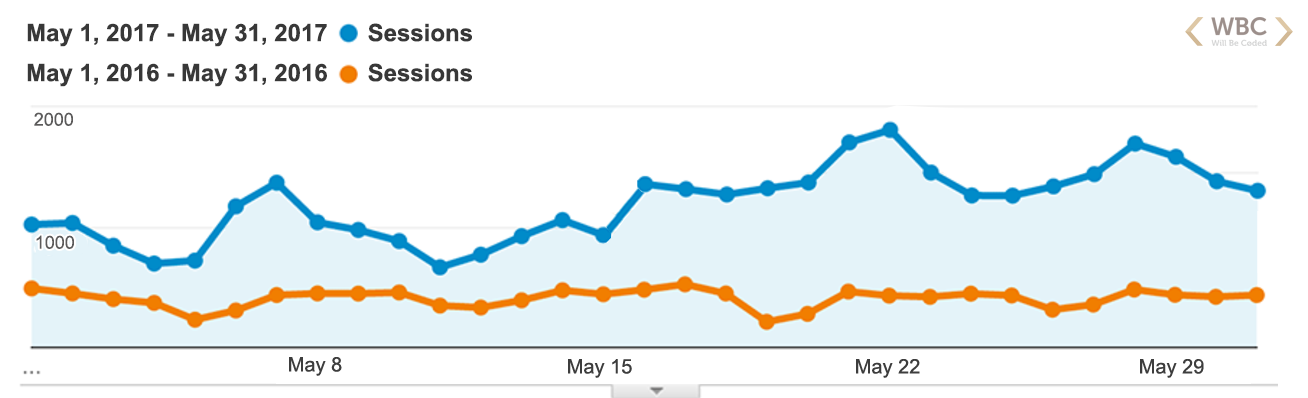
Also, the results of us using the above tactics to increase traffic meant that we increased the number of clients of the law firm by 25 people in the space of 2 months. In general, our client received nearly 47 calls during this period of time.
Running an AdWords Campaign
When it comes to advertising law firms, your company should definitely consider running an AdWords campaign as it can help grow sales by 300%. Despite this, AdWords is only used by around 25% of businesses.
Results of Managing an AdWords Campaign
An AdWords campaign can be expensive, but it is definitely worth it. Our most recent campaign had the company running their advertising for just 2 weeks: the result was 17 calls, of which 5 turned into clients. All for a cost of five hundred dollars.
All in all, our company has run more than 20 campaigns for lawyers in different legal practice areas (personal injury, vehicular motor accidents, and family law, to name a few), in the major Canadian cities (Toronto, Vancouver, Edmonton). Thus, we can safely say that we have found what works and what doesn’t work when it comes to AdWords for a law firm. Read on for tips on how to get the best out of your AdWords campaign and in this way how to get new clients for a law firm.
More Relevant Information Means More Clients
AdWords campaigns by themselves are quite limited in their scope, for two separate reasons. One is, of course, that there is a limit to the amount of space which businesses have to work with; the second is that they don’t have much control over what the finished product looks like. Businesses can be reasonable that an AdWords campaign for a law firm will have one main headline displayed first, but other than that, they can never be sure what will appear where.
Fortunately, AdWords comes with a variety of extensions which can be used to get the great effect. Most people do not take advantage of these extensions, which can eat into the possibility of successful conversions.
In general, an AdWords campaign for lawyers should include all the relevant information possible: contact details for the firm, location, facts about the services provided, and so on. Don’t generalize when giving this information. Generalizing is something which will only take up space and leave everyone frustrated because they don’t have the information they need. It is best to focus on what people might want, as a way to grab their attention – this will focus them on the advert as a whole. Also, make sure that the first headline catches people’s eyes.
Rather than simply having customers and prospects be passive observers, try and involve them in the AdWords campaign. One way to do this is by asking hypothetical questions which they might want to answer:
- • Do you need a lawyer?
- • Have you had an accident you could claim for?
- • Were you recently in a car accident?
- • Do you stuck in a marriage?
This grabs people’s attention and leaves them wanting to learn more about the advert and the business behind it, while also engendering trust in people, as it gives the impression that the people behind the advert know what they are talking about.
Also, you need to ensure positive landing page experience to your prospects because it’s a key point that makes a connection between your website and an AdWords ad. When your landing page reveals irrelevant information, you will just waste your money on online advertising for attorneys.

Add a Call to Action
A call to action is something which incites people to action, whatever that action might be. It could be as simple as clicking through to a site or as complex as going through an interview process. Calls to action are there to motivate customers and prospects more than a simple advert could do; and this is what really works in internet marketing for a law firm.
A call to action can take a variety of forms:
- • Phone the best personal injury firm in Vancouver now! (Call to action combined with targeted keywords)
- • Make an appointment today!
- • Look at your claim with an expert!
An AdWords campaign for lawyers could do much worse than adding a call to action to help people who are viewing their adverts make a decision. When used correctly, they can drastically increase conversions. Part of our service with Google AdWords for attorneys is to try out different calls to action to see what works best – we have tried up to 5 different calls to action in previous campaigns.
Use Negative Keywords
Where positive keywords are used to have the individual adverts in an AdWords campaign appear on relevant searches, negative keywords are just as important in law practice marketing. Negative keywords are used by advertisers to keep their adverts from appearing on searches where they would be of no use to anyone.
The best example of negative keywords when it comes to how to advertise a law firm would, in fact, be the word ‘lawyer’ as that is much too broad to be truly helpful. Using negative keywords properly will save you a lot of money in the long run, as it keeps you from having to pay money for adverts being clicked on by people who would never use your assistance. This is a simple but powerful answer to such a question as how to attract clients to law firms.
When working on individual campaigns, we normally use between 100 to 300 negative keywords as it allows us to spend the money for the campaign more narrow in order to encompass more potential clients.
Location Settings
AdWords for lawyers can use location setting in a variety of ways. One way is to use positive or negative keywords which involve location settings, such as ‘divorce lawyers in Vancouver’, for example. The other way is to use the settings on search engines themselves, tweaking them to allow you to only display your adverts on searches which are for a particular geographical area.
Using location services might seem like an obvious thing to do in PPC for lawyers but many businesses do not use them. This leads to a lot of needlessly wasted money when people click on adverts which are for services in entirely different areas of the country.
Conversions and Call Tracking
The best way to know if PPC for a law firm is working is to track how many people are coming to your site from other places on the web. Tracking what people clicked on adverts is easy enough since that information is recorded anyway but when it comes to people phoning in, it can be more difficult in advertising for law firms. Attorneys should put a lot of effort into understanding the entire picture of their clients’ activity.
Combined conversions and call tracking allows to see where the money for the campaign is being spent; adverts which are not performing well can be ditched, with the money being re-directed into a part of the campaign which is performing well.
Campaign Testing
Testing a campaign is vital if it is to work correctly. Our company always has at least 5 different versions of the advertising message to see how they all look and which one works best.
Similarly, check your own site to ensure that it is working properly. AdWords campaigns and any other form of effective advertising for lawyers will do no good if a prospect is put off by a slow website with irrelevant information.
Every AdWords campaign should have one advertising run dedicated to remarketing. Remarketing is a process which can be used by small law firm marketing to continue to advertise to prospects which were almost fully involved in becoming clients, but who for some reason left at the last minute.
The remarketing campaign in our last AdWords campaign was aimed at increasing conversions from potential clients and used lists to target people specifically based on their age, gender, and interests so that we could target them with a specific remarketing advert. The results gave us a nearly 20% increase on Return on Investment.

Search Engine Optimization
We use search engine optimization for lawyers as a means of ensuring that a site of a law firm lawyer well-suited to being picked up by search engine algorithms. Also, our aim of lawyer SEO marketing is to make sure that a website of a law firm is highly customized, revealing all needed information and being easy to navigate (the best law firm SEO companies can won’t skip a site of a lawyer).
There is a number of ways to do the best SEO for law firms when it comes to a law firm advertising agency. First of all, a site should be full of high-quality relevant and useful content and should be easy to navigate. Before creating any content and optimizing a site, law SEO experts (as we are) need to analyze a target audience, do a keywords research and build a content strategy. In this way, link building is also a mandatory way to increase the weight of a site. Also, the best SEO for law firms includes doing research on the competition to see what they are doing with their online advertising. Besides, it is important that every law firm has a Google account for their business and also cultivate a local presence (Yelp, Avvo) as a part of lawyer SEO marketing. Lastly, a lawyer should have some kind of social media presence, using whichever platform is most appropriate.

Advertising on Yelp
What is Yelp and Why Do Lawyers Need It?
Yelp allows people to leave and read reviews on whichever company they are interested in, provided it has a presence on the site. The reviews themselves have two different levels – there is the basic five-star section, and the section where people can leave text reviews, and also add pictures if they choose. Yelp is important when advertising for law firms because reviews can make or break someone’s reputation.
For proper law firm advertisement, good and varied reviews on Yelp are necessary. A good number of reviews (ensuring that they are not all perfect since this will breed mistrust) will show that a law firm is well known as this builds trust among those who are looking to hire a lawyer. Building up a presence on Yelp is something which is not easy but that is becoming more and more necessary in the internet marketing for law firms. Not only does Yelp allow for reviews to be kept in one place, it also allows for a good place for research to be done into competitors, since the reviews will show what they did well and what they did not.
What Our Company Have Done in This Way
Our company has taken many steps in covering Yelp reviews when it comes to our clients, including building up their own portfolio while also simultaneously using the platform to do research into other companies.
Our research into the competition is useful for a variety of reasons: it allows us to see what kind of content and marketing strategies works for them, while also keeping an eye on what reviews are saying about them. Further than that, we are working to increase the number of reviews left and use this to track metrics through the Yelp dashboard.
Conclusion
Internet advertising for lawyers is something which can take many forms. Many people think using AdWords combined with the SEO for law firms is too complicated, and so they miss out on having one of the best ways to increase conversions to their sites. In this way, it is always better when work is done by professionals. This especially works if you do not know how to attract clients to a law firm or where to start in online advertising.
Willbecoded is a team of dedicated specialists who can help a law firm in managing an AdWords campaign, in optimizing a site for search engines as well as in managing reviews and in providing a positive online reputation. We know how to attract clients to your law firm.
Call us today to get new clients and grow your legal practice!
The Issue of Truthfulness in Online Reviews
There are several issues when it comes to online review management, which should really be covered here before anybody enters into the review game themselves. It is important to note that a customer review will differ from a business review, but both are equally significant to the ongoing health of interest and traffic to the business and its online sites.

Once that is understood, move onto the content itself. People often lie when it comes to reviews, both individuals and businesses. Individuals can do so for many different reasons, but when businesses do it, it is normally because they want good Google reviews, positive Yelp reviews, or good feedback on some other platforms.
Online reputation management is something which is becoming increasingly important, especially when coupled with the changing ways in which people are interacting with the online world. The use of reviews can make or break a company, so care should be taken.
However, much businesses might like to avoid online feedback, it is impossible to do so in the current way in which the online world is used. No online reviews means no reputation, and because of customers using feedback to ultimately on where and from whom they are going to make purchases, no reviews ultimately means fewer customers and less business traffic to your sites.
The Importance of Online Reviews
Online reviews management is important because of the role they play in the overall health of the company being reviewed. When the internet and the online world as a whole did not exist, businesses, both small and large, depended on word of mouth to spread knowledge about their products, as well as the usual marketing methods which would have existed. Online reviews are almost an exact replacement for that word of mouth since they are used by customers in almost exactly the same way. Where word of mouth stood for opinions and advice, people online use reviews for opinions and advice, looking through most or all of the various review sites which exist in order to truly get a picture of what they are buying.

It has also been found that customers trust the online reviews that they see to a great degree, to the point where nearly all self-reported customers would be hesitant to buy a product if there were no feedback for it. Review management is vitally important for this reason, because if a review is what can tip 97% percent of people into buying a product over not buying it, then the issue of whether or not reviews can be ultimately trusted becomes even more important. Three quarters of all customers who have been interviewed over the years say that it isn’t so much the star ratings which lead to them to buy or pass over a product, but the review itself, and what it says.
As well as this, there are several things that should be remembered by every business which relies on reviews, to whatever extent: review sites have a lot of traffic to them every day. Having your name attached to them will boost traffic to your sites and social media platforms, and this goes double for having good feedback. The type of review matters as well – marketing is increasingly moving to social media platforms, so Facebook reviews are gaining in importance, particularly if you also have a Facebook presence. Finally, remember that customers have shown that they are willing to pay good money for products which have good feedback, and high numbers of good reviews at that.
Truthful Reviews as a Way to Understand your Customers
There has been a lot of research done into why customers act the way they do when it comes to shopping, but the underlying factors which go into that behavior and what caused it have so far not been the focus. Those underlying factors – the reasons for review management being as important as it is – are most likely a combination of adapting to changing circumstances with shopping habits which have not changed from before the advent of the internet.

The modern shopping experience takes the form of the three ‘r’s’ – research, recommendations, and returns, each one of which requires good online review services.
Research
The rise of digital technology has, in some ways, completely changed the way in which people shop. Before the rise of the internet, there was a limit to a number of information people had access to – they could speak to people they knew about the products and services which they were thinking about buying. Moreover, they could perhaps compare products and services from various retailers, if they had the time to spend going between shops. Also, of course, they can see the marketing for the various products and services. Digitalisation and the ways in which people use the internet (particularly the increasing portion of them who use mobile devices) are changing the information that is available – vastly increasing it. People can now access multiple reviews and multiple retailers from the comfort of their own home, and compare notes to see what different products are selling for, and what people think of them.
Recommendations
Before the rise of digitalisation, companies and businesses of all sizes held most of the power when it came to the client-retailer relationship. This, however, is changing due to the increasing use of Google business reviews and online feedback of all kinds, a fact which is changing the balance in the favor of customers and clients. As has been discussed above, before the internet, people were limited in their options when it came to discussing what they wanted to buy.
The internet gives people a space to talk about the purchases they have made and so provides a way for other people to find those recommendations. Recommendations are a powerful thing – if a product is good, and people say it’s good, then it is likely that people will buy it more often.
Returns
It is not something which is immediately apparent, even when taking into account the huge explosion in internet usage, but the more expansive returns policies which are a necessary part of the online shopping experience is changing the way in which shopping and shopping in person, happens. Returns can happen for many reasons – the customer could have wanted to try something on to see for sure if it was what they thought it was, only to ultimately decide that they didn’t like it as much as they had; they could be suffering from buyer’s remorse; or, and this is the worst from the perspective of the retailer, they could have found that the product did not live up to the reviews which they had read.
What can you do to Build Truthful Reviews?
Building truthful reviews is something which can be done in a variety of ways, especially considering that companies have access to the same digital devices and information hubs that their customers do. Businesses and individuals with an online shop should encourage everyone who visits their site (even if it is just a visit) to leave positive reviews about their experience, and also to recommend the site to other people. An extension of this (and of managing online reviews as a whole) is reaching out to bloggers who write about the area you work in, and asking them to write about your site. Sweeten the deal by offering them discounts or free products with their next purchase from your site.
Monitor your social media – these platforms are becoming increasingly popular with people for sharing reviews and information about products which can be found online. The platforms are also helpful in tracking down fake reviews, and problematic ones. An email list can be helpful in a number of ways: when it comes to cultivating an online reputation, as it allows for emails to be sent out to everyone at once asking for reviews of your site, or you can simply use it to send out surveys to everyone who has come to the site. However, it is important that you do not use any kind of platform to either coerce fake reviews out of other people or write them yourself.
In Case of Negative Feedback
Negative feedback is something which happens to every company, but there are ways to deal with it that will mitigate the effect it has on your company. Getting management feedback on these reviews, and what to do about them is the first step to dealing with negative reviews, and managing reputation.

First of all, try to understand why the review is negative; maybe get in contact with the customer to get a clearer picture of the issues. Don’t try and hide any negative news behind the positive reviews you may have had. Focus on fixing the problem.
Follow the following steps when faced with a negative review:
- • Apology to the customer.
- • Explain what went wrong as far you are able and give a clear idea of how you intend to fix things.
- • Ask them to give the company another chance with their time and money, with an assurance that what happened will not happen again.
- • Finally, make sure to own the problem by signing your name to the reply.
In Case of Fake Reviews
Sadly, fake reviews are also part of the job when you are on the internet. There are only a few things you can do to manage your reputation in these circumstances. Always be polite when responding to fake feedback, and make a logical argument which takes down the fake review point by point.
The Pros of Having More Reviews
Online reputation management reviews in most cases only make the brand you are offering stronger, as they are concrete proof that you can deliver on your promises. Reviews also act as a means of advertising your business – they improve search engine ratings, allowing businesses to appear higher up in searches, meaning that they will be more easily noticed.
Don’t you need help?
Correlation between PPC and Brand Building
There is a lot of evidence to suggest that branding – so long as it is consistent and well-thought out across the entire business structure, is something which truly works across the entire marketing spectrum. Brand indeed matters when it comes to everything about a business, from its reputation to its staying power in people’s minds.

When it comes to PPC marketing, branding, therefore, becomes double important. If a PPC campaign works by making adverts pop up on relevant searches done by an appropriate target market, how much more effective would it be if there was an associated brand with which to trigger people’s memories.
Similarly, PPC can function as a means of expanding a brand by ensuring that it appears on the front page of search engines and social media platforms, allowing it to grow, and to act as a reassurance to its customers that it is easy to come back to. It could also be argued that having a brand appear in adverts makes it easier to be a loyal customer in the first place.
The biggest company brands got to their position by understanding their target audience and their customer base very well indeed. When building brand identity, they relied on some form of marketing to do so; now, PPC marketing offers them a means to maintain that brand in the minds of their customers and prospects.

As far as businesses which do not hold the top position in terms of branding, they can still utilise PPC marketing for the same purposes: online brand reputation management is something to which PPC is well suited, and using it will not only bring the business in, but will serve the two-fold purpose of building their brand, and associating that brand with the product which is being sought after.
Finally, there is one more aspect of PPC marketing which could make it useful for brand building: while a business might not be a number on the list of companies which people would buy from, there is no reason to suggest that people will have no use for your services.
Marketing is not solely involved in gaining new customers, although that is its primary goal for many businesses. PPC and brands can work together to make a business seem competent through its ability to provide information and answers to those who need it. And, of course, once those people have gone to that business for information, then they are more likely to return to it when they have more concrete needs, the brand at this point having been ingrained in their minds as something to trust.
Basics
PPC is primarily known for its marketing abilities, and not so much its ability to build a brand or assist in its online brand reputation management, but it can be used for both of these things. PPC, as has been seen, is something which makes adverts appear on certain search engines. It can be used to build a brand because, even if people running searches don’t click on the advert, they have still been made aware of it. This is part of how to build a brand; make people aware that it exists first and foremost.

There is a specific tool called Core Paid Search which runs in both Google and Bing, which can help to raise awareness while also hopefully working to increase the number of conversions to the site itself. Core Paid Search works by moving your adverts to strategic segments of the search, allowing for a greater degree of awareness to be built around the presence of the brand itself. The tool also has another use, this time a more active one than simply building awareness by allowing brands to pop up on search engines in the form of PPC marketing when the right keywords were entered into the search platform. Using Core Paid Search along with other associated PPC marketing tools allows for the brand to be made interesting by only showing it at certain times. This could also tie in with using the brand to pique people’s interest through the use of blog posts and other means to discuss problems and how to fix them.
To build interest in a brand, it is important to know who and what the target audience is for developing a strategy. Investigate all keywords thoroughly, and investigate the audience to see what keywords they might use in the future. Being able to predict which keywords will be used is extremely useful in terms of knowing where to go next to draw the most attention with your campaign.
PPC experts will tell any business that works with them that a PPC campaign mixed with branding is something which requires immediate action if it is to succeed. The Core Paid Search tool was only part of the overall program – PPC marketing allows businesses and individuals both to take action in bringing themselves into greater prominence.
Consider a flower shop which is trying to get more publicity. It can do this in two different ways: it can build up its brand by having various adverts and landing pages appear in response to specific keywords being used: at this point, it could be blog posts on how to properly care for or arrange flowers. Once a brand has been established, the next step is to change the adverts into ones which are more specifically adverts aimed at paying customers, rather than curious visitors.
Two Types of PPC: Brand-focused and Sales-focused
As shown above, there are two types of PPC available for use, and PPC experts would be able to tell you which are the most applicable to your situation, and how they can be combined.

In order to truly combine brand-focused and sales-focused PPC, make sure that you have thoroughly researched the customer base – those people who want help and advice may be different from those who wish to buy a product on sale, but both are useful for branding and advertising purposes. To properly do this, make sure the brand is recognizable, and make sure to try different tactics for building a brand because what works for one campaign won’t work for another.
Conclusion
The question of whether or not PPC is an effective tool when it comes to brand building is a complicated one. PPC management services would no doubt say that PPC marketing could be very useful in brand building, so long as the proper approach was taken. One advantage to PPC marketing as a whole, however, is that the setup allows for experiments – if you and your business want to try specifically building your brand by using PPC, then it is worth giving it a shot.